
 Posted by
In March 2020 I wrote about a wave of South African startups that wanted to change how spaza shops buy stock, take payments and get credit. Looking back, most of the independent ones have since gone out of business. What survived was mostly the payments business, and that has been bought up by banks and big retailers. The spaza itself, meanwhile, has been through one of the hardest periods in its history.
The spaza economy
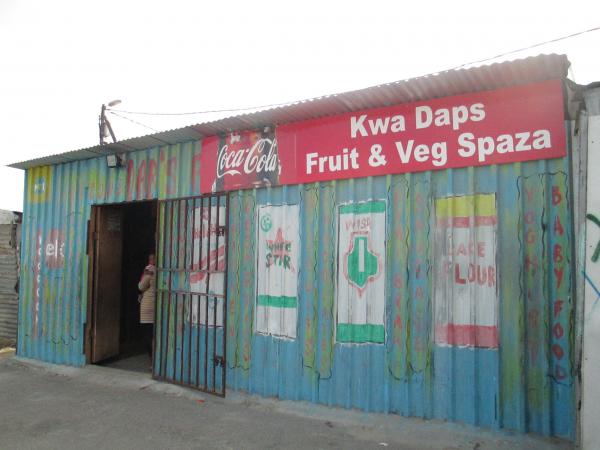
Spaza shops are the backbone of township economies. When I first wrote about them, there were estimated to be more than 150,000, adding around R120 billion a year to the economy, with about 90% of transactions in cash. Pepkor now puts the spaza market at around R190 billion, within an informal economy it values at R900 billion to R1.5 trillion.
The case for the spaza has not changed. Most township residents rely on taxis, and a trip to a mall is expensive, tiring and time-consuming, with heavy bags to carry home from the taxi rank. A shop around the corner that sells in small quantities, sometimes a single egg or a teabag, and offers credit to regular customers fills a real need.
A hard few years
In late 2024, more than 20 children died in Gauteng after eating snacks bought from spaza shops, in cases linked to illegal pesticides. The government ordered every spaza and food-handling outlet to register, and inspectors closed hundreds of shops that did not comply. When registration closed in February 2025, municipalities had recorded only about 82,000 registered spazas, far fewer than the number believed to be trading. Many owners struggled with the paperwork, and many simply never registered.
The government also launched a R500 million Spaza Shop Support Fund for South African-owned shops, to pay for stock, equipment and upgrades. Progress has been slow. By mid-2026, about R180 million had gone to 2,369 businesses, held back by applicants who lacked trading permits or could not prove they owned the shop.
On top of that, anti-immigrant protests in 2026 forced hundreds of foreign-owned spazas to close in parts of the country, leaving some townships with fewer shops and higher prices for basics.
What happened to the startups
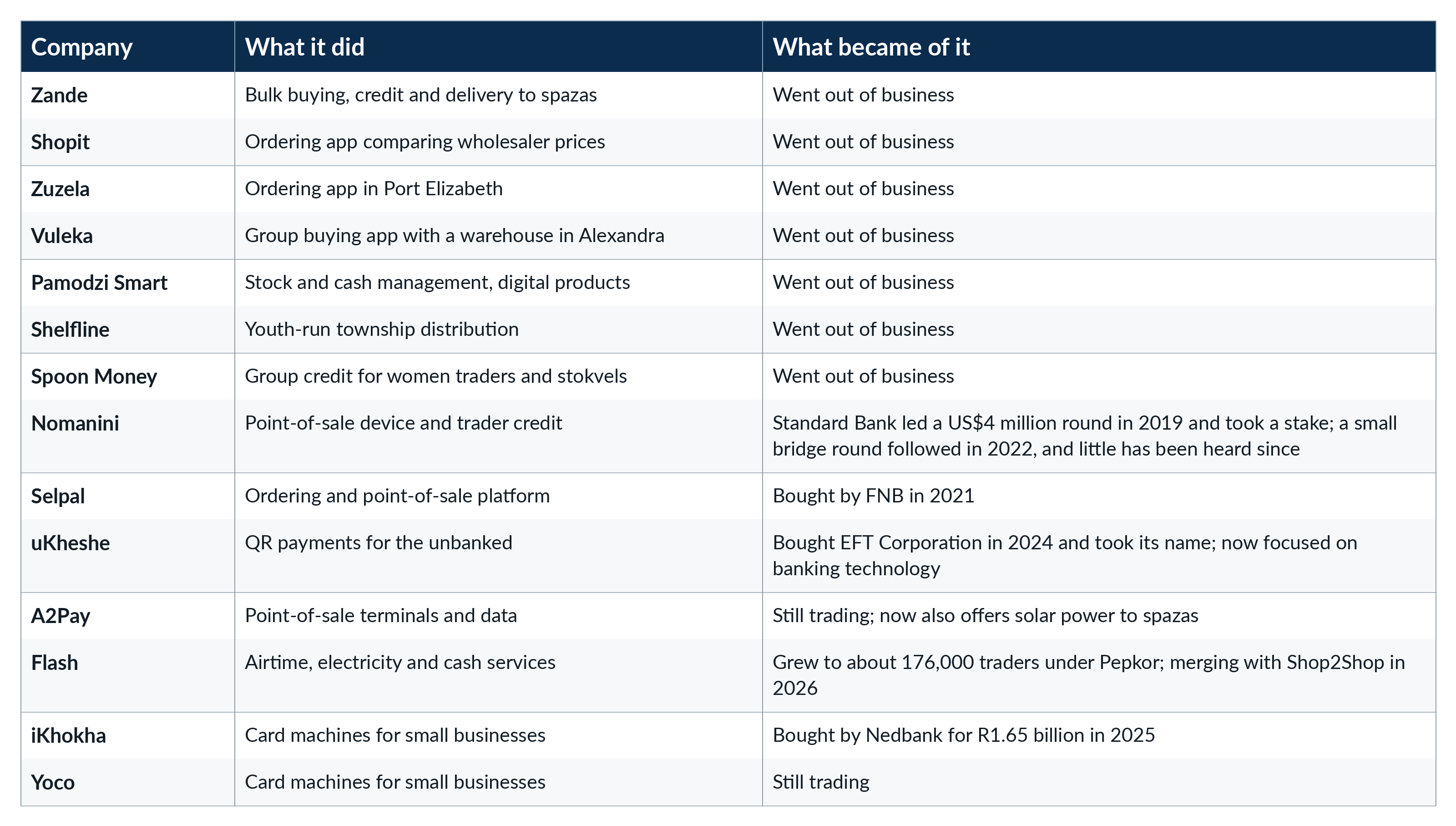
When I first wrote this article, I listed more than a dozen companies to watch. Most of the ordering and distribution startups have since closed. The ones that lasted were mainly in payments, and several of those were bought by banks and retailers.
Why the ordering startups failed
In hindsight, the startups that tried to sit between the manufacturer and the spaza, taking orders and delivering stock, ran into the same problems as B2B platforms elsewhere in Africa. Margins on groceries are thin, deliveries to small shops are expensive, and the wholesalers and cash-and-carries they were trying to replace already offered credit, choice and a relationship. Few spaza owners were willing to change suppliers to save a few rand on a case of cooking oil.
Payments were different. Selling airtime, electricity and lottery tickets, and later card payments and cash withdrawals, earns a small fee on every transaction without holding any stock. That is why the businesses still standing are the point-of-sale and payments platforms, and why the big companies have bought them.
The big players move in
The township payments market now belongs to banks and retailers. FNB bought Selpal, and Standard Bank took a stake in Nomanini. Nedbank bought iKhokha. Pepkor built Flash into a network of about 176,000 traders and in 2026 agreed to merge it with Shop2Shop in a deal valuing the combined business at R21.3 billion. In August 2026 Shoprite bought 51% of R&A Cellular, whose point-of-sale devices sit in spaza shops across the country. MTN launched MoMo Pay for informal traders in 2025, and TymeBank customers can now withdraw cash at spazas through Flash.
The prize is not the groceries. It is the data and the payments flowing through the spaza counter, which can be used to offer loans, insurance and banking to shop owners and their customers. The startups were right that digitising the spaza would unlock credit. They just could not afford to wait long enough to collect.
What this means for suppliers
For FMCG companies, the spaza is still the most important channel in the township, but it has become harder to read. Many shops are unregistered, ownership is shifting, and the government is pushing hard for formalisation. At the same time, the point-of-sale networks now run by Pepkor, Shoprite and the banks will hold the best data on what spazas sell. Suppliers who want to understand the channel may end up working through them.
First published in March 2020. Updated November 2026.

