
 Posted by
In 2023, a report by Clean Up Kenya and Wildlight for the Changing Markets Foundation (CMF) found that as many as one in three garments “recycled” from the European Union (EU) to Kenya are of such poor quality that they are dumped or burned soon after arrival. The study argued that sending junk clothing to poorer countries had become an easy way for the fashion industry to get rid of the polyester and nylon clothes it overproduces, and that this was damaging Kenya’s air, soil and water. The NGOs recommended that the EU make it illegal to “dump” the 112 million items of clothing it sends to Kenya each year.
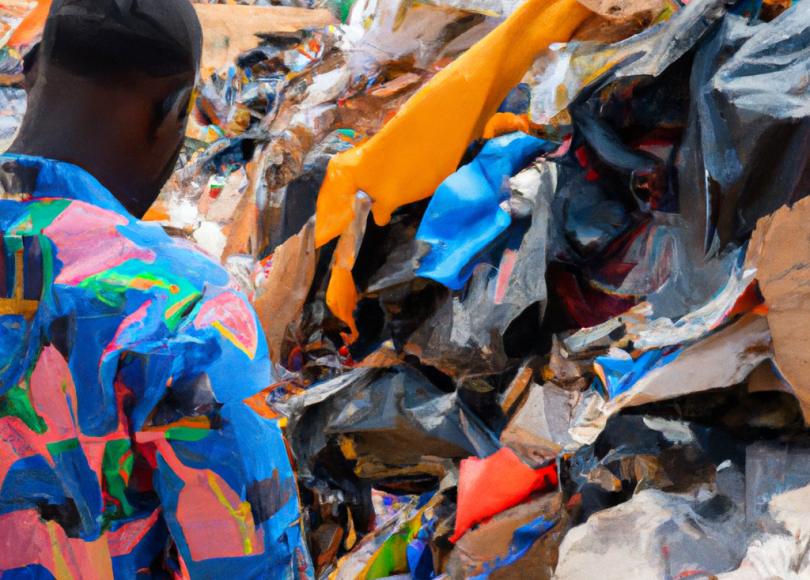
The report estimated that more than 900 million items of used clothing were exported to Kenya in 2021, mostly from Europe and North America. Up to 458 million of those may have been waste, and up to 307 million probably contained plastic fibres. Much of it ends up at Dandora, Nairobi’s main dumpsite, in the Nairobi River, or is burned as fuel in homes and small factories.
The report called for brands to be held responsible for their waste and for clothing to be designed to last. It also said the used-clothing trade was being used to get around EU rules that ban the dumping of non-recyclable plastic waste in poorer countries. Since 69% of textiles are now made from plastics such as nylon and polyester, the report argued that much of this clothing should fall under those rules.
Kenyan traders said clothing from the EU often arrives soiled with vomit, heavy stains and animal hair, or is no use in Kenya’s climate, such as ski jackets and heavy winter coats. The report said the problem is probably bigger than it appears, because the investigation only looked at clothing exported directly to Kenya. Many used garments are first sent to other countries, in and outside Europe, for sorting before being exported again, which makes them almost impossible to trace. The report called for more transparency to stop waste clothing being passed off as second-hand goods.
Not everyone agreed with the findings. Some used-clothing sellers in Kenya said the report gave a “wildly inaccurate” picture of the trade. Second-hand clothing, known in Swahili as mitumba, is a living for many people. Research commissioned by the Mitumba Consortium Association of Kenya estimates that up to 4.9 million people across East Africa depend on the trade, and Kenya is now Africa’s largest importer of second-hand clothing. Many buyers also prefer mitumba because it is cheaper and often better made than new clothing sold locally.
Since the report came out, the EU has changed some of its rules. A revised Waste Framework Directive came into force in October 2025. Every member state now has 30 months to set up a scheme that makes producers of clothing, footwear and household textiles pay for collection, sorting and recycling. Used textiles will also have to be collected separately and sorted before they are exported. Separately, the EU’s new Waste Shipment Regulation bans exports of plastic waste to non-OECD countries such as Kenya from 21 November 2026. From May 2027, most other non-hazardous waste can only go to non-OECD countries that ask for it and can show they will handle it properly.
These rules may not stop the problem entirely. Clothing declared as second-hand goods is not treated as waste, and that is how much of the unusable clothing has reached Kenya. The new sorting rules are meant to deal with this, but it is up to each member state to enforce them.
Kenya has tried to protect its own textile manufacturers without making clothing more expensive for ordinary people. In early 2026, the Treasury proposed a 5% tax on mitumba imports. Parliament dropped it and replaced it with a single import duty paid at the border. Under the East African Community’s latest tariff changes, Kenya kept its duty on used clothing at 35% or US$0.20 per kilogram, whichever is higher. The EAC first spoke about phasing out second-hand clothing imports almost ten years ago, but the trade is still growing.
Good-quality used clothing creates jobs and gives people affordable clothes. The problem is the bales of torn and stained polyester that traders can’t sell, which cost them money and end up in Kenya’s rivers and dumpsites.

