
 Posted by
For centuries, feeder towns and markets have been the knots that hold trade routes together. The image that comes to mind is of camel caravans on a dusty Silk Road, but the same pattern is everywhere today. Goods travel from ports and factories to a handful of big markets, then on to smaller towns, and from there to villages. Any business that wants to sell beyond the capital needs to understand how these places work.
What feeder towns are
Feeder towns are hubs for supply and distribution. Buyers come to the market themselves, or they use agents who buy on their behalf and send the goods on.
Some markets specialise in a category, such as electronics, textiles or pharmaceuticals, and these can draw buyers from a very wide area, often across national borders. How far people are willing to travel depends on the product, the price and what is available at home. In Kano, in northern Nigeria, I met buyers from Niger and Chad shopping for photographic equipment. They told me that lower prices and the range on offer in Nigeria made the long journey worth it.
The pattern repeats across the continent. Kariakoo in Dar es Salaam supplies traders from Rwanda, Burundi, Zambia, Malawi, Mozambique and the DRC; a Burundian textile trader once said that if you ask in Bujumbura where a fabric came from, the answer is always Kariakoo. Eastleigh in Nairobi, built up by Somali traders since the 1990s, sells clothing, electronics and household goods to buyers from Uganda, Tanzania, South Sudan and Ethiopia, and supplies much of Kampala’s Kikuubo wholesale market. Dantokpa in Cotonou, one of the largest markets in West Africa, has long served as a re-export hub, with Nigerian traders coming to buy goods that Benin imported for exactly that purpose.
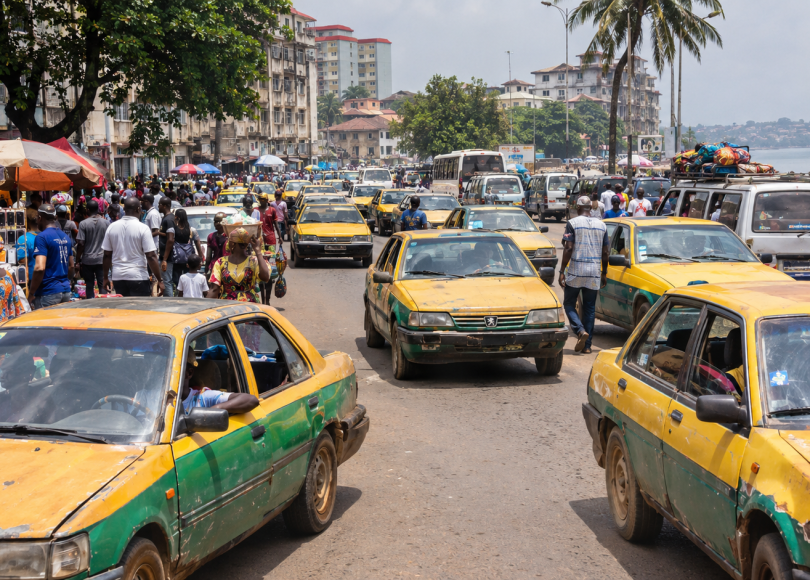
Not all feeder markets are in big cities like Lagos or Addis Ababa. Smaller towns, including third- and fourth-tier cities, often act as feeders for the communities and villages around them. Infrastructure and trade routes decide where these markets grow. In Paga, a small border town in northern Ghana, traders sell dried fish brought in from as far away as coastal Nigeria, Togo and Benin. When supplies from Ghana’s own coast run short, they hire a lorry and go to Ouagadougou instead.
Bigger than the statistics show
Much of this trade never shows up in official figures. Research by the OECD’s Sahel and West Africa Club estimates that food trade within West Africa is worth around US$10 billion a year, about six times what official statistics record, and that 85% of it goes unrecorded. It is also less local than people assume. Leading exporters such as Senegal, Ghana and Côte d’Ivoire do between 40% and 60% of their regional trade with countries they do not border.
For a business planning distribution, the lesson is that the map in the official data and the map on the ground are often very different. The flows that matter most may run through a market town you have never heard of, or across a border you assumed was closed.
Value-added services
Feeder markets offer more than price and choice. In a market that specialises in one category, buyers can compare prices quickly. They can share trucks and coordinate deliveries back to their towns and villages to cut transport costs. Sellers give credit to customers they trust, often for days or weeks, and break bulk for buyers from smaller places who cannot afford a full case or pallet. Money changers, transporters, porters and clearing agents all cluster around the market, so a trader can buy, finance, pack and ship in one place.
These services are why feeder markets are so hard to replace. A number of venture-backed platforms tried to bypass the wholesaler and the market in recent years, delivering directly to small shops. Most found that the market did far more than they had realised, especially in providing credit and handling small, irregular orders. Technology is changing how these markets work, with orders and payments now moving over WhatsApp and mobile money, but it has strengthened the traders more often than replaced them.
When the routes shift
Feeder markets are resilient, but they are not fixed. Prices on either side of a border can differ sharply; at Kasumbalesa, between Zambia and the DRC, traders talk of Zambian goods selling for two or three times as much once they cross. When a government changes tariffs, closes a border or cracks down on traders, the flows move. Benin’s re-export trade to Nigeria rises and falls with Nigeria’s import rules and currency. Eastleigh traders have complained that higher Kenyan taxes are driving regional buyers to Tanzania and Uganda, and Kariakoo saw its regional buyers stay away in the uncertain weeks after Tanzania’s October 2025 election.
[FIELD NOTE: Another market or feeder town you have seen yourself, and what made it work.]
What it means for business
Wherever you are in Africa, feeder towns are part of your distribution network, whether you planned it that way or not. Your product is probably already moving through markets and across borders you do not track. Before deciding where to put a distributor, a depot or a sales team, it is worth finding out where your category is actually bought and sold, who the big wholesalers are, where their customers come from, how they pay and how the goods travel onwards. Getting that right is often worth more than any amount of modelling done from the capital.
First published in August 2011. Updated November 2026.

